
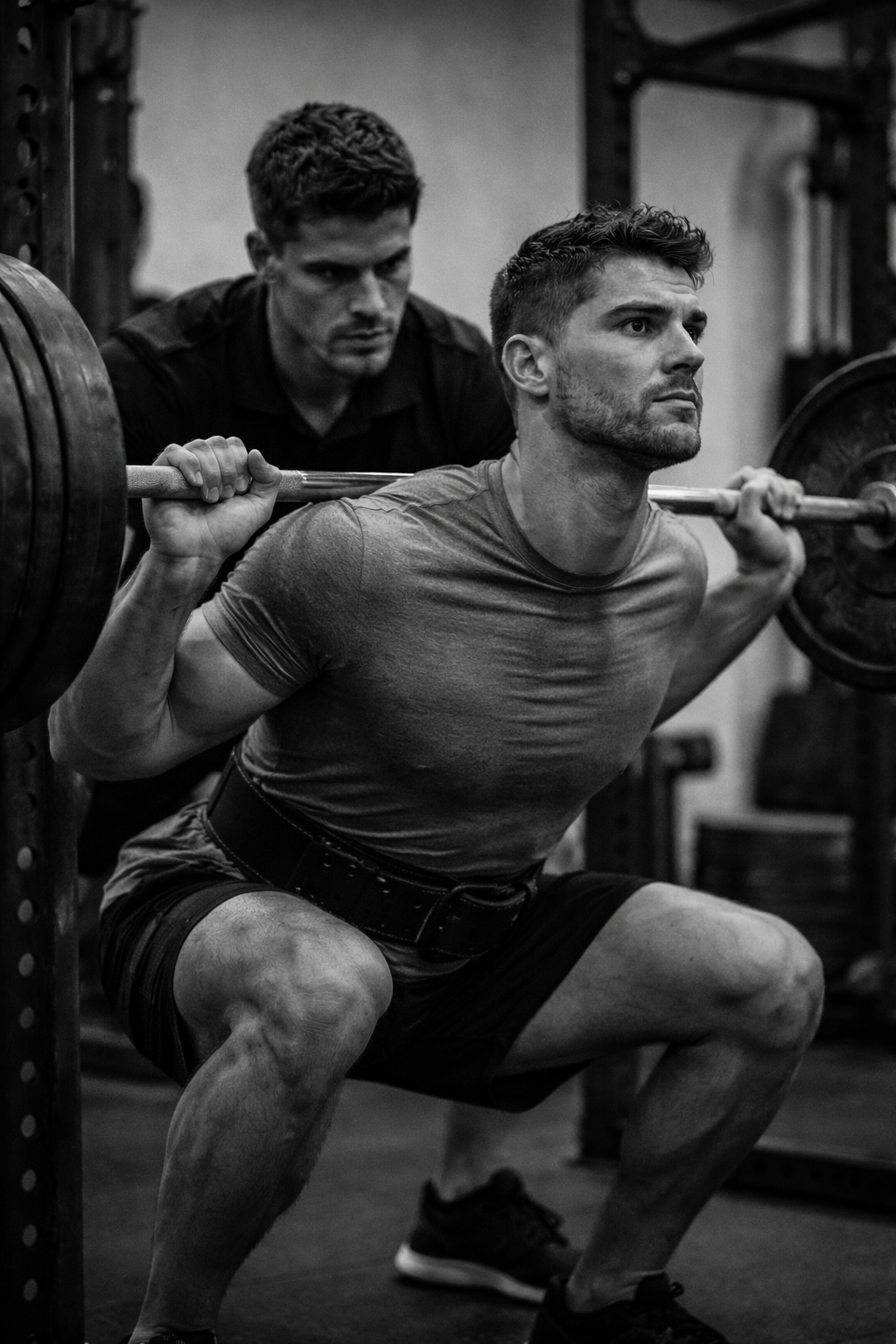
Evidence-Based Progressive Strength & Conditioning
Building Strength, Capacity, and Long-Term Resilience
Strength development is one of the most effective ways to restore function, reduce pain, and improve long-term physical resilience. At IC Strength Physical Therapy, rehabilitation programs incorporate evidence-based progressive strength and conditioning principles to help patients rebuild their physical capacity and return confidently to the activities they enjoy.
Rather than relying on passive treatments alone, we focus on active rehabilitation strategies that improve strength, coordination, and movement efficiency. This approach helps ensure that improvements made during therapy translate into lasting improvements in performance and everyday activity.
A Performance-Focused Approach to Rehabilitation
Many musculoskeletal injuries occur when the body is unable to tolerate the physical demands placed on it. Whether those demands come from daily activities, exercise, or sport, improving the body’s ability to handle load is a key part of recovery.
Progressive strength training helps restore the body’s ability to:
Generate force
Absorb impact
Control movement
Tolerate higher levels of activity
By gradually increasing the demands placed on the body, rehabilitation programs help tissues adapt and become more resilient over time.
Expertise in Both Rehabilitation and Strength Training
At IC Strength Physical Therapy, strength and conditioning programs are designed and supervised by a clinician who holds both a Doctor of Physical Therapy (DPT) degree and the Certified Strength and Conditioning Specialist (CSCS) credential.
This dual background allows rehabilitation programs to bridge the gap between clinical rehabilitation and performance training.
Treatment programs are designed with an understanding of:
Injury mechanisms and tissue healing
Biomechanics and movement analysis
Strength and conditioning principles
Exercise progression and load management
This integrated approach ensures that rehabilitation is both safe and effective while still challenging enough to drive meaningful physical improvement.
Individualized Strength Programming
Every patient has different physical demands and goals. Strength programs are always individualized based on factors such as:
Injury history
Current strength and mobility levels
Training background
Work and daily activity demands
Athletic or recreational goals
Programs may include exercises designed to improve:
Core and trunk strength
Hip and lower body power
Upper body strength and stability
Balance and neuromuscular control
Functional movement patterns
The goal is not only to address the current injury, but to build the physical capacity needed to prevent future injuries.
Progressive Rehabilitation
One of the most important principles in strength and conditioning is progressive overload, which refers to gradually increasing the demands placed on the body.
In rehabilitation, this may involve progressing variables such as:
Resistance or load
Exercise complexity
Range of motion
Speed or power
Functional or sport-specific movements
By carefully progressing these variables, patients can safely rebuild strength while restoring confidence in their ability to move.
Bridging Rehabilitation and Return to Activity
Many traditional rehabilitation programs stop once pain improves. However, returning to exercise, sport, or physically demanding activities often requires a higher level of strength and physical preparedness.
Strength and conditioning based rehabilitation helps bridge this gap by preparing patients to return to:
Weight training
Running and recreational sports
Physically demanding occupations
High level athletic performance
This approach ensures patients are not only pain-free, but also physically prepared for the activities they want to return to.
Long-Term Results
At IC Strength Physical Therapy, the goal of strength-based rehabilitation is not simply to eliminate pain. Instead, the focus is on improving the body’s ability to move well, handle physical stress, and remain active long-term.
By combining rehabilitation science with strength and conditioning principles, patients can develop the strength and movement capacity needed to stay active and perform at their best.